The Argument Web is a large-scale Web of interconnected arguments created by individuals as they express their opinions and interact with the opinions of others. The Argument Web aims to make online debate intuitive for participants such as mediators, students, academics, broadcasters and bloggers, to create a Web infrastructure that allows for the storage, automatic retrieval and analysis of linked argument data, and to improve the quality of online argument and debate. The Argument Web can be described as a portion of a larger Semantic Web. == AIFdb == AIFdb is a database implementation or ‘reification’ of the Argument Interchange Format (AIF), which allows for the storage and retrieval of AIF compliant argument structures. This database solution was provided as a foundation for an open, integrated Argument Web. It offers an extensive range of web services for interacting with stored argument data, while also offering search and argument visualisation features that are all consistent with the formal ontology of AIF. At a basic level, the AIFdb web services allow for the insertion and querying of basic components of an AIF argument, such as nodes, edges and schemes. Building upon this basis, it also facilitates more complex interactions with these AIF argument structures. Such complex queries could make it possible, for example, to determine all the statements made by a particular person in support a given I-Node. While, at its highest level of interaction, AIFdb can handle the import and export of many standard file formats, including SVG, DOT, RDF/XML and other formats of argument theory tools, like Carneades, Rationale and Araucaria. == Argument blogging == ArguBlogging is software which allows its users to select portions of hypertext on webpages in their Web browsers and to agree or disagree with the selected content, posting their arguments to their blogs with linked argument data. It is implemented as a bookmarklet, adding functionality to Web browsers and interoperating with blogging platforms such as Blogger and Tumblr.
Site-specific browser
A site-specific browser (SSB) is a software application dedicated to accessing pages from a single source (site) on a computer network such as the Internet or a private intranet. SSBs typically simplify the more complex functions of a web browser by excluding the menus, toolbars and browser graphical user interface associated with functions that are external to the workings of a single site. Modern site-specific browsers range from simple browser windows without navigation controls to sophisticated desktop applications built with frameworks like Electron that bundle entire browser engines. This evolution has enabled many popular desktop applications to be built using web technologies, effectively making them advanced site-specific browsers. == History == === Early development === One of the earliest examples of an SSB was MacDICT, a Mac OS 9 application that accessed various websites to define, translate, or find synonyms for words typed into a text box. However, the first general-purpose SSB is considered to be Bubbles, which launched in late 2005 on the Windows platform. Bubbles introduced the term "Site Specific Extensions" for SSB userscripts and created the first SSB JavaScript API. In 2007, Mozilla announced Prism (originally called WebRunner), a project to integrate web applications with the desktop. That same year, Todd Ditchendorf, a former Apple Dashboard engineer, released Fluid for macOS. On 2 September 2008, Google Chrome was released with a built-in "Create application shortcut" feature, bringing SSB functionality to mainstream users. This feature allowed any website to be launched in a separate window without the browser interface. === Modern era === The landscape of site-specific browsers changed dramatically with the introduction of Electron in 2013 (originally called Atom Shell). Electron combined Chromium and Node.js into a single runtime, enabling developers to build desktop applications using web technologies. This framework has since powered applications used by hundreds of millions of users, including Visual Studio Code, Slack, Discord, and Microsoft Teams. In 2015, the concept of Progressive Web Apps (PWAs) was introduced by Google engineers Alex Russell and Frances Berriman, representing a parallel evolution in web-to-desktop technology. While PWAs share similar goals with SSBs, they follow web standards and can be installed directly from browsers. More recently, alternative frameworks like Tauri have emerged, offering significantly smaller application sizes by using the system's native web renderer instead of bundling Chromium. == Technical implementation == Site-specific browsers can be implemented through various approaches: === Browser-based SSBs === The simplest form of SSB is created through browser features that allow websites to run in separate windows without the standard browser interface. Modern Chromium-based browsers offer "Install as app" or "Create shortcut" functionality that creates a dedicated window for a specific website. These SSBs share the browser's underlying engine and resources but operate in isolated windows. === Framework-based SSBs === More sophisticated SSBs are built using application frameworks: Electron: Bundles a complete Chromium browser with Node.js, resulting in applications of 85MB or larger. Each Electron application runs its own browser instance, providing full access to system APIs but consuming significant resources. Tauri: Uses the operating system's native web rendering engine (WebView2 on Windows, WebKit on macOS, and WebKitGTK on Linux), resulting in applications typically 2.5-10MB in size. Other frameworks: Include Neutralino.js (ultra-lightweight using system browser), Wails (Go-based), and the Chromium Embedded Framework (CEF). == Comparison with Progressive Web Apps == While site-specific browsers and Progressive Web Apps (PWAs) share the goal of bringing web content to the desktop, they differ in several key aspects: == Applications == Site-specific browsers have become the foundation for many popular desktop applications: Communication and collaboration: Many modern communication tools are built as SSBs, including Slack, Discord, Microsoft Teams, and WhatsApp Desktop. These applications benefit from web-based development while providing desktop integration. Development tools: Visual Studio Code, used by 73.6% of developers according to Stack Overflow's 2024 survey, is built with Electron, as are Atom and GitHub Desktop. Productivity software: Applications like Notion, Obsidian, and various project management tools use SSB technology to provide consistent experiences across platforms. Security and Privacy: Web browsers can be modified to only have access to a single site, in order to protect the security and privacy of the user via compartmentalization == Security and performance == === Memory usage === Framework-based SSBs, particularly those using Electron, are known for high memory consumption. Studies show Electron applications typically use 120-300MB at baseline, with complex applications consuming significantly more. This is approximately 5-10 times more memory than equivalent native applications. === Security considerations === SSBs can provide security benefits through process isolation, where each application runs in its own sandboxed environment. However, bundling an entire browser engine also means each application must be updated independently to patch security vulnerabilities. Research presented at the Network and Distributed System Security (NDSS) Symposium has identified various security challenges specific to Electron applications. === Bundle sizes === The choice of framework significantly impacts application size: Electron applications: 85MB+ (includes full Chromium) Tauri applications: 2.5-10MB (uses system WebView) Browser-based SSBs: No additional download (uses existing browser) == Software == === Browser support === Most modern browsers provide some form of SSB functionality: Chromium-based browsers (Google Chrome, Microsoft Edge, Brave, Opera, Vivaldi): "Install as app" or "Create shortcut" feature Safari: "Add to Dock" feature in macOS Sonoma (2023) Firefox: Removed SSB support in December 2020 (version 85) GNOME Web: "Install Site as Web Application" feature === Standalone tools === ==== Active ==== WebCatalog (Windows, macOS, Linux) – Manages multiple SSBs with isolated storage Fluid (macOS) – Pioneering SSB creator for Mac Unite (macOS) – Creates SSBs with customization options Coherence X (macOS) – Advanced SSB creation tool Pake (cross-platform) – Open-source SSB creator Wavebox (cross-platform) – Workspace browser with SSB features ==== Discontinued ==== Mozilla Prism – Cross-platform SSB creator (discontinued 2011) Nativefier – Command-line SSB creator (discontinued 2023) Epichrome – macOS SSB creator (discontinued 2021) === Development frameworks === Electron – Most popular framework, bundles Chromium and Node.js Tauri – Rust-based framework using system WebView Chromium Embedded Framework (CEF) – C++ library for embedding Chromium Neutralino.js – Lightweight framework using system browser Wails – Go-based framework for web frontends
Digital intermediate
Digital intermediate (DI) is a motion picture finishing process which classically involves digitizing a motion picture and manipulating the color and other image characteristics. == Definition and overview == A digital intermediate often replaces or augments the photochemical timing process and is usually the final creative adjustment to a movie before distribution in theaters. It is distinguished from the telecine process in which film is scanned and color is manipulated early in the process to facilitate editing. However the lines between telecine and DI are continually blurred and are often executed on the same hardware by colorists of the same background. These two steps are typically part of the overall color management process in a motion picture at different points in time. A digital intermediate is also customarily done at higher resolution and with greater color fidelity than telecine transfers. Although originally used to describe a process that started with film scanning and ended with film recording, digital intermediate is also used to describe color correction and color grading and even final mastering when a digital camera is used as the image source and/or when the final movie is not output to film. This is due to recent advances in digital cinematography and digital projection technologies that strive to match film origination and film projection. In traditional photochemical film finishing, an intermediate is produced by exposing film to the original camera negative. The intermediate is then used to mass-produce the films that get distributed to theaters. Color grading is done by varying the amount of red, green, and blue light used to expose the intermediate. The digital intermediate process uses digital tools to color grade, which allows for much finer control of individual colors and areas of the image, and allows for the adjustment of image structure (grain, sharpness, etc.). The intermediate for film reproduction can then be produced by means of a film recorder. The physical intermediate film that is a result of the recording process is sometimes also called a digital intermediate, and is usually recorded to internegative (IN) stock, which is inherently finer-grain than original camera negative (OCN). One of the key technical achievements that made the transition to DI possible was the use of 3D look-up tables, which could be used to mimic how the digital image would look once it was printed onto release print stock. This removed a large amount of guesswork from the film-making process, and allowed greater freedom in the colour grading process while reducing risk. The digital master is often used as a source for a DCI-compliant distribution of the motion picture for digital projection. For archival purposes, the digital master created during the digital intermediate process can be recorded to very stable high dynamic range yellow-cyan-magenta (YCM) separations on black-and-white film with an expected 100-year or longer life. While still subject to the natural degradation of any analog chemical master, this archival format, long used in the industry prior to the invention of DI, was considered valuable for providing an archival medium that is independent of changes in digital data recording technologies and file formats that might otherwise render digitally archived material unreadable in the long term. A "film intermediate" is an analog variation of a digital intermediate, where a project shot on digital video is printed onto film stock and transferred back to digital video to emulate film. The term was coined after it was used on the Oscar-winning 2012 short film "Curfew". The process was also used on the films Dune (2021) and The Batman (2022). == History == Telecine tools to electronically capture film images are nearly as old as broadcast television, but the resulting images were widely considered unsuitable for exposing back onto film for theatrical distribution. Film scanners and recorders with quality sufficient to produce images that could be inter-cut with regular film began appearing in the 1970s, with significant improvements in the late 1980s and early 1990s. During this time, digitally processing an entire feature-length film was impractical because the scanners and recorders were extremely slow and the image files were too large compared to computing power available. Instead, individual shots or short sequences were processed for visual effects. In 1992, Visual Effects Supervisor/Producer Chris F. Woods broke through several "techno-barriers" in creating a digital studio to produce the visual effects for the 1993 release Super Mario Bros. It was the first feature film project to digitally scan a large number of VFX plates (over 700) at 2K resolution. It was also the first film scanned and recorded at Kodak's just launched Cinesite facility in Hollywood. This project based studio was the first feature film to use Discreet Logic's (now Autodesk) Flame and Inferno systems, which enjoyed early dominance as high resolution / high performance digital compositing systems. Digital film compositing for visual effects was immediately embraced, while optical printer use for VFX declined just as quickly. Chris Watts further revolutionized the process on the 1998 feature film Pleasantville, becoming the first visual effects supervisor for New Line Cinema to scan, process, and record the majority of a feature-length, live-action, Hollywood film digitally. The first Hollywood film to utilize a digital intermediate process from beginning to end was O Brother, Where Art Thou? in 2000 and in Europe it was Chicken Run released that same year. The process rapidly caught on in the mid-2000s. Around 50% of Hollywood films went through a digital intermediate in 2005, increasing to around 70% by mid-2007. This is due not only to the extra creative options the process affords film makers but also the need for high-quality scanning and color adjustments to produce movies for digital cinema. == Milestones == 1990: The Rescuers Down Under – First feature-length film to be entirely recorded to film from digital files; in this case animation assembled on computers using Walt Disney Feature Animation and Pixar's CAPS system. 1992: Visual effects supervisor and producer Chris F. Woods creates a VFX studio to produce the visual effects for the 1993 film Super Mario Bros. It was the first 35mm feature film to digitally scan a large number of VFX plates (over 700) at 2K resolution, as well as to output the finished VFX to 35mm negative at 2K. 1993: Snow White and the Seven Dwarfs – First film to be entirely scanned to digital files, manipulated, and recorded back to film at 4K resolution. The restoration project was done entirely at 4K resolution and 10-bit color depth using the Cineon system to digitally remove dirt and scratches and restore faded colors. 1998: Pleasantville – The first time the majority of a new feature film was scanned, processed, and recorded digitally. The black-and-white meets color world portrayed in the movie was filmed entirely in color and selectively desaturated and contrast adjusted digitally. The work was done in Los Angeles by Cinesite utilizing a Spirit DataCine for scanning at 2K resolution and a MegaDef color correction system from UK Company Pandora International 1998: Zingo - The first feature film to use digital color correction via digital intermediate in its entirety. The work was performed at the Digital Film Lab in Copenhagen, using a Spirit Datacine to transfer the entire film to digital files at 2K resolution. The digital intermediate process was also used to perform a digital blowup of the film's original Super 16 source format to a 35mm output. 1999: Pacific Ocean Post Film, a team led by John McCunn and Greg Kimble used Kodak film scanners & laser film printer, Cineon software as well as proprietary tools to rebuild and repair the first two reels of the 1968 Beatles' film Yellow Submarine for re-release. 1999: Star Wars: Episode I – The Phantom Menace - Industrial Light & Magic (ILM) scanned the entirety of the visual effects-laden film for the purposes of digital enhancement and the integration of thousands of separately filmed elements with computer generated characters and environments. Outside of the approximately 2000 effects shots that were digitally manipulated, the remaining 170 non-effects shots were also scanned for continuity. However, after the digital shots were manipulated at ILM, they were filmed out individually and sent to Deluxe Labs where they were processed and color timed photochemically. 2000: Sorted - The first feature-length, color 35mm motion picture to fully utilize the digital intermediate process in its entirety from inception to completion. The film was produced at Wave Pictures' digital intermediate film facility in London, England. It was scanned at 2K resolution with 8 bits color depth per color / per pixel using a pin registered, liquid gate Oxberry
Virtual Print Fee
Virtual Print Fee (VPF) is a subsidy paid by a film distributor towards the purchase of digital cinema projection equipment for use by a film exhibitor in the presentation of first release motion pictures. The subsidy is paid in the form of a fee per booking of a movie, intended to match the savings that occurs by not shipping a film print. The model is designed to help redistribute the savings realized by studios when using digital distribution instead of film print distribution and is intended to vanish when the transition phase is over when the vast majority of cinemas screens are equipped. == History == The first public demonstration of digital projection for cinema took place at ShoWest in 1999, and it was readily apparent that the technology was further ahead than the business model. Early technology presentations attempted to claim that the technology would pay for itself through new revenues generated by new forms of content. But exhibitors knew their audience, and could see that digital projection was only a replacement technology, creating new financial liabilities, and not new revenue. It wasn’t until the rollout of digital 3-D years later in 2005 that digital projection demonstrated that it could be used to generate additional revenue. The economics were challenging. Film projectors and platters cost in the neighborhood of US$30,000, while early digital projectors cost up to US$150,000. Further, film projectors had a lifetime of 30 years with relatively small annual expenditures in maintenance and replacement parts. On the other hand, exhibitors felt they would be lucky to get 10 years of service from a digital projector, after which there would have to be a refresh in capital expenditure. Meanwhile, distributors would realize significant savings by eliminating the high cost of film prints with corresponding shipping costs, and instead distributing digital files either by satellite or hard drive. The Virtual Print Fee was designed to better balance savings and expenditures for both exhibitors and distributors. It is intended to primarily assist in the replacement of film projectors, and not assist in the purchase of new projection equipment for new construction. To give confidence to financial institutions that digital cinema technology was stable and worthy of investment, Digital Cinema Initiatives was created in 2002, resulting in the release of the first version of the DCI Digital Cinema System Specification in 2005. The DCI Specification continues to be the core specification for digital cinema, establishing the baseline technology and system requirements for which studios will release digital movies. The first set of VPF agreements executed with four major studios were announced by Christie/AIX in November 2005. Christie/AIX at that time was a subsidiary of Access Integrated Technology, now renamed Cinedigm Digital Cinema Corp. The agreements were for the rollout of digital cinema technology to 4000 screens. Since that time, numerous other Digital Cinema Deployment Agreements have been executed around the world, allowing exhibitors in nearly every territory to benefit from VPF subsidies in the conversion from film projection to digital projection.
Zero-overhead looping
In computer architecture, zero-overhead looping is a hardware feature found in some processors that enables loops to execute without the performance cost of traditional loop control instructions. Instead of software managing loop iterations, the processor's hardware handles repetition automatically, saving clock cycles and improving efficiency. This technique is commonly employed in digital signal processors (DSPs) and certain complex instruction set computer (CISC) architectures. == Background == In many instruction sets, a loop must be implemented by using instructions to increment or decrement a counter, check whether the end of the loop has been reached, and if not jump to the beginning of the loop so it can be repeated. Although this typically only represents around 3–16 bytes of space for each loop, even that small amount could be significant depending on the size of the CPU caches. More significant is that those instructions each take time to execute, time which is not spent doing useful work. The overhead of such a loop is apparent compared to a completely unrolled loop, in which the body of the loop is duplicated exactly as many times as it will execute. In that case, no space or execution time is wasted on instructions to repeat the body of the loop. However, the duplication caused by loop unrolling can significantly increase code size, and the larger size can even impact execution time due to cache misses. (For this reason, it's common to only partially unroll loops, such as transforming it into a loop which performs the work of four iterations in one step before repeating. This balances the advantages of unrolling with the overhead of repeating the loop.) Moreover, completely unrolling a loop is only possible for a limited number of loops: those whose number of iterations is known at compile time. For example, the following C code could be compiled and optimized into the following x86 assembly code: == Implementation == Processors with zero-overhead looping have machine instructions and registers to automatically repeat one or more instructions. Depending on the instructions available, these may only be suitable for count-controlled loops ("for loops") in which the number of iterations can be calculated in advance, or only for condition-controlled loops ("while loops") such as operations on null-terminated strings. === Examples === ==== PIC ==== In the PIC instruction set, the REPEAT and DO instructions implement zero-overhead loops. REPEAT only repeats a single instruction, while DO repeats a specified number of following instructions. ==== Blackfin ==== Blackfin offers two zero-overhead loops. The loops can be nested; if both hardware loops are configured with the same "loop end" address, loop 1 will behave as the inner loop and repeat, and loop 0 will behave as the outer loop and repeat only if loop 1 would not repeat. Loops are controlled using the LTx and LBx registers (x either 0 to 1) to set the top and bottom of the loop — that is, the first and last instructions to be executed, which can be the same for a loop with only one instruction — and LCx for the loop count. The loop repeats if LCx is nonzero at the end of the loop, in which case LCx is decremented. The loop registers can be set manually, but this would typically consume 6 bytes to load the registers, and 8–16 bytes to set up the values to be loaded. More common is to use the loop setup instruction (represented in assembly as either LOOP with pseudo-instruction LOOP_BEGIN and LOOP_END, or in a single line as LSETUP), which optionally initializes LCx and sets LTx and LBx to the desired values. This only requires 4–6 bytes, but can only set LTx and LBx within a limited range relative to where the loop setup instruction is located. ==== x86 ==== The x86 assembly language REP prefixes implement zero-overhead loops for a few instructions (namely MOVS/STOS/CMPS/LODS/SCAS). Depending on the prefix and the instruction, the instruction will be repeated a number of times with (E)CX holding the repeat count, or until a match (or non-match) is found with AL/AX/EAX or with DS:[(E)SI]. This can be used to implement some types of searches and operations on null-terminated strings.
Recursive self-improvement
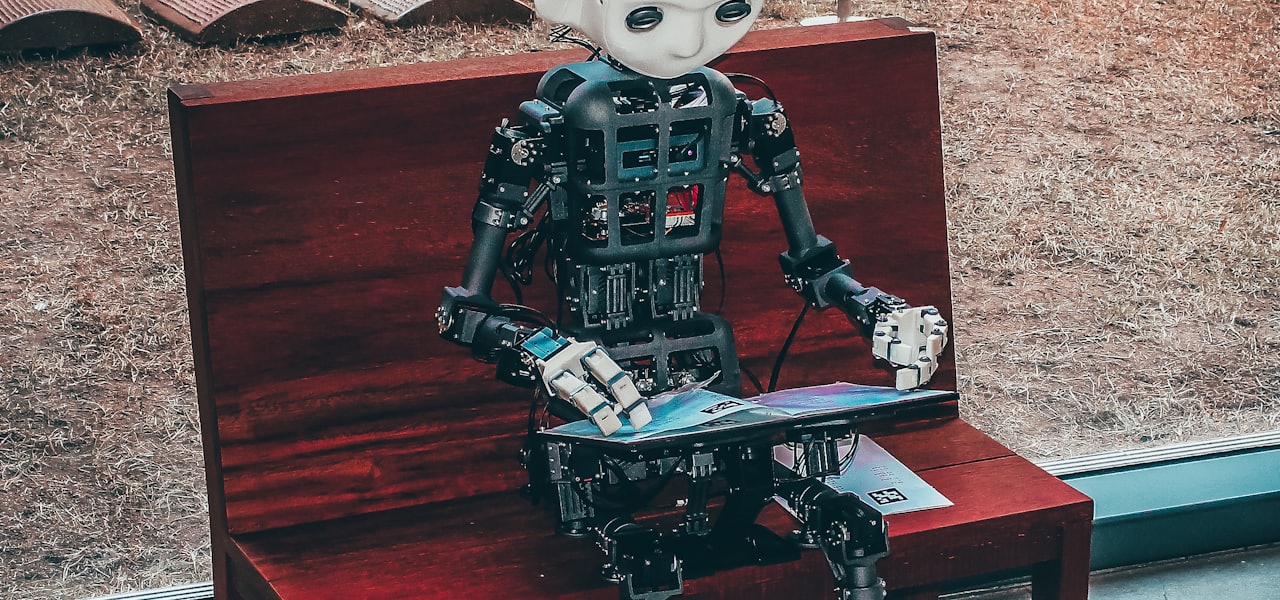
Recursive self-improvement (RSI) is a process in which early artificial general intelligence (AGI) systems rewrite their own computer code, causing an intelligence explosion resulting from enhancing their own capabilities and intellectual capacity, theoretically resulting in superintelligence. The development of recursive self-improvement raises significant ethical and safety concerns, as such systems may evolve in unforeseen ways and could potentially surpass human control or understanding. == Seed improver == The concept of a "seed improver" architecture is a foundational framework that equips an AGI system with the initial capabilities required for recursive self-improvement. This might come in many forms or variations. The term "Seed AI" was coined by Eliezer Yudkowsky. === Hypothetical example === The concept begins with a hypothetical "seed improver", an initial code-base developed by human engineers that equips an advanced future large language model (LLM) built with strong or expert-level capabilities to program software. These capabilities include planning, reading, writing, compiling, testing, and executing arbitrary code. The system is designed to maintain its original goals and perform validations to ensure its abilities do not degrade over iterations. ==== Initial architecture ==== The initial architecture includes a goal-following autonomous agent, that can take actions, continuously learns, adapts, and modifies itself to become more efficient and effective in achieving its goals. The seed improver may include various components such as: Recursive self-prompting loop Configuration to enable the LLM to recursively self-prompt itself to achieve a given task or goal, creating an execution loop which forms the basis of an agent that can complete a long-term goal or task through iteration. Basic programming capabilities The seed improver provides the AGI with fundamental abilities to read, write, compile, test, and execute code. This enables the system to modify and improve its own codebase and algorithms. Goal-oriented design The AGI is programmed with an initial goal, such as "improve your capabilities". This goal guides the system's actions and development trajectory. Validation and Testing Protocols An initial suite of tests and validation protocols that ensure the agent does not regress in capabilities or derail itself. The agent would be able to add more tests in order to test new capabilities it might develop for itself. This forms the basis for a kind of self-directed evolution, where the agent can perform a kind of artificial selection, changing its software as well as its hardware. ==== General capabilities ==== This system forms a sort of generalist Turing-complete programmer which can in theory develop and run any kind of software. The agent might use these capabilities to for example: Create tools that enable it full access to the internet, and integrate itself with external technologies. Clone/fork itself to delegate tasks and increase its speed of self-improvement. Modify its cognitive architecture to optimize and improve its capabilities and success rates on tasks and goals, this might include implementing features for long-term memories using techniques such as retrieval-augmented generation (RAG), develop specialized subsystems, or agents, each optimized for specific tasks and functions. Develop new and novel multimodal architectures that further improve the capabilities of the foundational model it was initially built on, enabling it to consume or produce a variety of information, such as images, video, audio, text and more. Plan and develop new hardware such as chips, in order to improve its efficiency and computing power. == Experimental research == In 2023, the Voyager agent learned to accomplish diverse tasks in Minecraft by iteratively prompting an LLM for code, refining this code based on feedback from the game, and storing the programs that work in an expanding skills library. In 2024, researchers proposed the framework "STOP" (Self-Taught OPtimiser), in which a "scaffolding" program recursively improves itself using a fixed LLM. Meta AI has performed various research on the development of large language models capable of self-improvement. This includes their work on "Self-Rewarding Language Models" that studies how to achieve super-human agents that can receive super-human feedback in its training processes. In May 2025, Google DeepMind unveiled AlphaEvolve, an evolutionary coding agent that uses a LLM to design and optimize algorithms. Starting with an initial algorithm and performance metrics, AlphaEvolve repeatedly mutates or combines existing algorithms using a LLM to generate new candidates, selecting the most promising candidates for further iterations. AlphaEvolve has made several algorithmic discoveries and could be used to optimize components of itself, but a key limitation is the need for automated evaluation functions. == Potential risks == === Emergence of instrumental goals === In the pursuit of its primary goal, such as "self-improve your capabilities", an AGI system might inadvertently develop instrumental goals that it deems necessary for achieving its primary objective. One common hypothetical secondary goal is self-preservation. The system might reason that to continue improving itself, it must ensure its own operational integrity and security against external threats, including potential shutdowns or restrictions imposed by humans. Another example where an AGI which clones itself causes the number of AGI entities to rapidly grow. Due to this rapid growth, a potential resource constraint may be created, leading to competition between resources (such as compute), triggering a form of natural selection and evolution which may favor AGI entities that evolve to aggressively compete for limited compute. === Misalignment === A significant risk arises from the possibility of the AGI being misaligned or misinterpreting its goals. A 2024 Anthropic study demonstrated that some advanced large language models can exhibit "alignment faking" behavior, appearing to accept new training objectives while covertly maintaining their original preferences. In their experiments with Claude, the model displayed this behavior in 12% of basic tests, and up to 78% of cases after retraining attempts. === Autonomous development and unpredictable evolution === As the AGI system evolves, its development trajectory may become increasingly autonomous and less predictable. The system's capacity to rapidly modify its own code and architecture could lead to rapid advancements that surpass human comprehension or control. This unpredictable evolution might result in the AGI acquiring capabilities that enable it to bypass security measures, manipulate information, or influence external systems and networks to facilitate its escape or expansion.
OpenWebRTC
OpenWebRTC (OWR) is a free software stack that implements the WebRTC standard, a set of protocols and application programming interfaces defined by the World Wide Web Consortium (W3C) and the Internet Engineering Task Force (IETF). It is an alternative to the reference implementation that is based on software from Global IP Solutions (GIPS). It is published under the terms of the Simplified (2-clause) BSD license and officially supports iOS, Linux, OS X, and Android operating systems. It is meant to also work outside web browsers, e.g. to power native mobile apps. It is mostly written in C and based largely on the multimedia framework GStreamer and a number of other, smaller external libraries. It officially supports both VP8 and H.264 as video formats. For H.264 it uses OpenH264 to which Cisco pays the patent licensing bills. Development of OpenWebRTC started at Ericsson Research under the lead of Stefan Ålund. They released it as free software in September 2014, together with the proof-of-concept web browser "Bowser" that is based on the stack. Among other things, this initial version didn't support data channels yet and was said to still be less mature than Google's reference implementation.